The technology in today's theaters is extraordinary. The screens are larger, the sound more immersive, the seats more comfortable than anything that existed when I started in this business. And yet, we are losing people. The slow, persistent erosion of habitual moviegoing is the defining challenge of our era — and the answer, at least in part, lies in the past.
As I look back on more than 40 years in the cinema industry — from field service and global manufacturing to helping develop the industry's first premium large-screen formats — I am struck by a paradox. We have invested billions of dollars in upgrading the hardware of the theatrical experience, while quietly allowing its soul to atrophy. We need to look back in order to move forward.
The Arc of American Cinema: A Century of Experience
The story of American moviegoing is, at its core, a story about the human need for shared experience. From the earliest nickelodeons to the great movie palaces of the 1920s and 1930s, the cinema was the most democratic and accessible form of public entertainment the world had ever seen. By the mid-1940s, weekly cinema attendance in the United States had reached its all-time peak, with an estimated 90 million Americans attending the movies every single week.[1]
The Golden Age and the Movie Palace
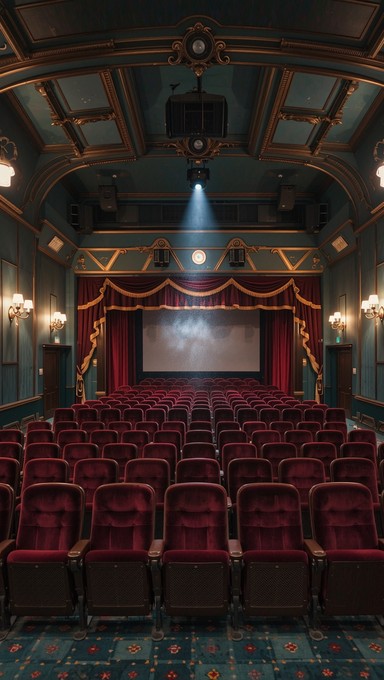
The movie palace of this era was not a multiplex. It was an architectural statement. Theaters were built with the explicit intention of making every patron feel, for the price of a ticket, that they had entered a world of luxury and splendor. Lobbies soared several stories high, lit by massive chandeliers. The auditoriums were decorated in elaborate themed styles — Spanish courtyards, Egyptian temples, Moorish castles — earning them the name "atmospheric theaters." People dressed to attend.[2]
The experience itself was a complete evening's entertainment. A patron did not simply watch a feature film. The program began with a newsreel — the only moving-image news most Americans would ever see — followed by a cartoon or two, and then a double feature. Two films for the price of one was not a gimmick; it was the standard expectation.[2]
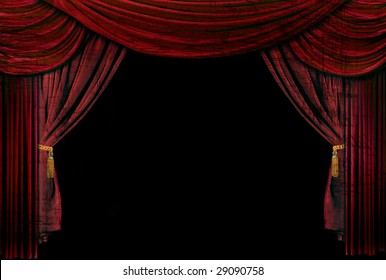
The heavy red velvet curtain that covered the screen before showtime was perhaps the most powerful single element of the classic cinema experience. It created anticipation. It signaled that something special was about to happen. When the lights dimmed and the curtain parted with a flourish, the audience fell silent. There was a collective intake of breath. The magic was beginning.[2]
When the lights dimmed and the curtain parted with a flourish, the audience fell silent. There was a collective intake of breath. The magic was beginning.
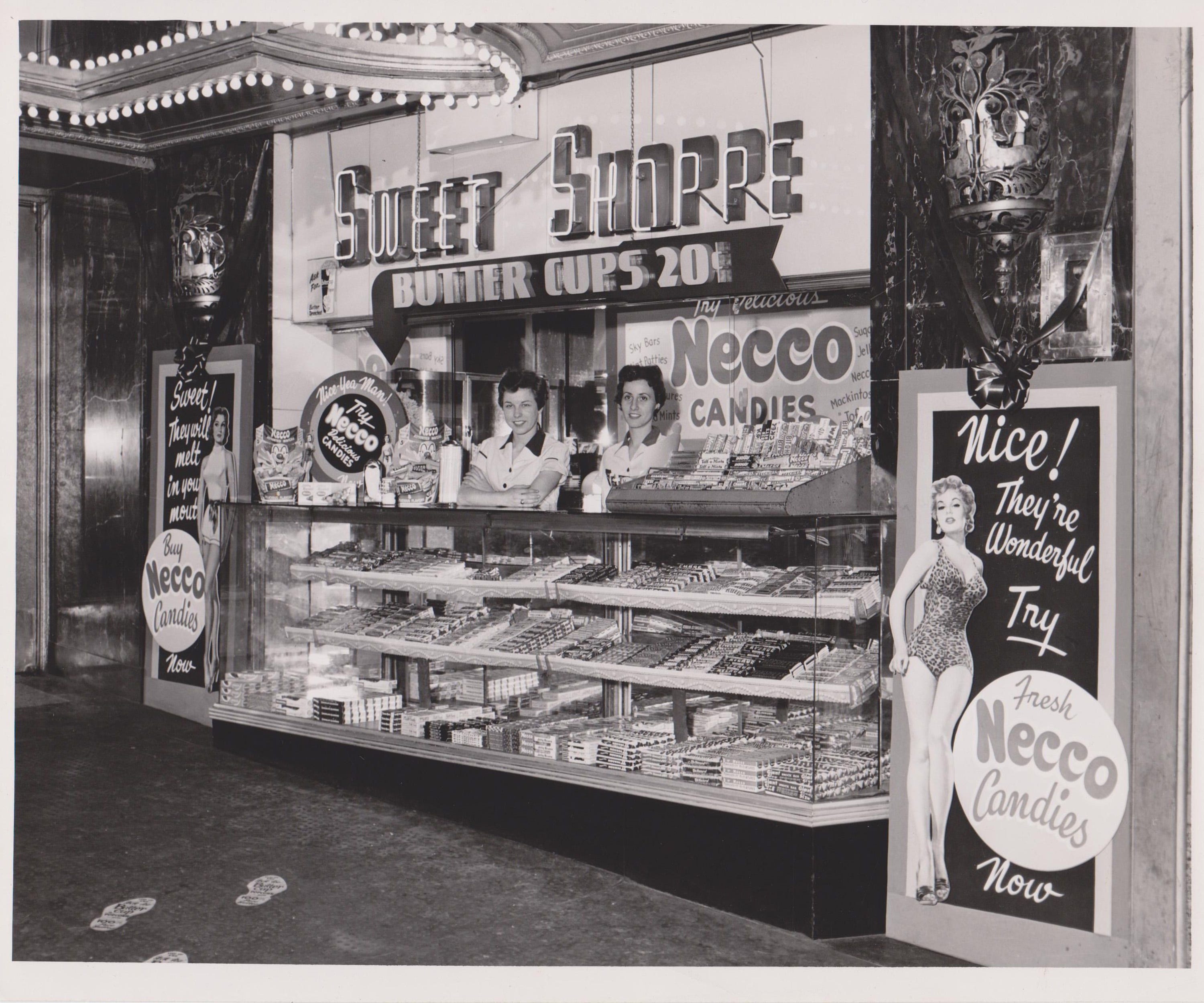
The glass candy case, filled with boxed treats — Sno-Caps, Raisinets, Milk Duds, Junior Mints — was a deliberate design choice. Candy was sold in boxes rather than bags because boxes were easier to re-close and easier to display, standing upright behind glass so that a patron waiting in line could see exactly what was available. The design was both practical and theatrical.[3] Uniformed ushers guided patrons to their seats with flashlights, maintained order, and served as the theater's first line of customer service — the equivalent of what we would today call a concierge.[2]
The Multiplex Era: Efficiency at the Cost of Soul
The transition from the single-screen movie palace to the multiplex, which accelerated through the 1970s and 1980s, was driven by sound economic logic. More screens meant more showtimes, more flexibility in programming, and the ability to serve more patrons simultaneously. But something was lost in the transition.
The velvet curtains came down, replaced by screens that were never blank — always showing a pre-show reel of local advertisements and trivia questions. The ushers were eliminated as a cost-saving measure. The double feature was abandoned. The architectural grandeur of the movie palace gave way to the functional geometry of the suburban shopping center multiplex — a box inside a larger box, designed for throughput rather than experience. The glass candy cases were replaced by modern retail displays that stripped away the theatrical quality of the purchase.[3]
When we began developing premium large formats in the late 1990s, it was a deliberate attempt to restore the sense of scale and spectacle that the multiplex era had diminished.[4] We built massive screens paired with state-of-the-art surround sound, because we understood that the cinema had to offer something categorically different from the home. It was the right instinct, and it worked. But it addressed only part of the equation.
The Current State of Exhibition
The post-pandemic recovery of the cinema industry has been real, but it has also been deeply asymmetric. The domestic box office generated approximately $8.8 billion in 2025 — a figure that sounds respectable until you examine the underlying attendance data. Actual ticket sales have fallen to approximately 780 million annually, down nearly 37 percent from the 1.2 billion tickets sold in 2019.[5] We are charging considerably more to considerably fewer people and calling it a recovery.
| Year | Tickets Sold | Box Office Revenue | Notes |
|---|---|---|---|
| 2002 | ~1.57 billion | ~$9.5 billion | Per capita admissions at highest since 1977 |
| 2019 | ~1.24 billion | ~$11.4 billion | Last pre-pandemic year |
| 2020 | ~223 million | ~$2.1 billion | Pandemic shutdowns |
| 2022 | ~845 million | ~$7.4 billion | Top Gun: Maverick drives recovery |
| 2023 | ~1.0 billion | ~$9.0 billion | Barbenheimer effect |
| 2025 | ~780 million | ~$8.8 billion | Attendance still 37% below 2019 |
Sources: MMCG Invest, Matthew Ball, MPAA
The casual, habitual moviegoer has largely disappeared. What remains is event-driven behavior. Audiences turn out in force for a cultural phenomenon, and then stay home for everything else. The exhibition industry's primary strategic response has been to invest heavily in premium formats and elevated food and beverage offerings.[6] This is the right strategy. But we are upgrading the hardware of the cinema experience while neglecting its soul.
The Nostalgia Playbook: What Other Industries Are Teaching Us
We are living through a remarkable cultural moment in which nostalgia is not merely a sentimental indulgence but a powerful economic force. Consumers are increasingly turning to experiences that provide comfort, emotional grounding, and a sense of control in an increasingly chaotic world.[7]
The most directly relevant example is the ongoing revival of Pizza Hut's classic dine-in experience. After years of pivoting toward delivery and digital convenience, Pizza Hut franchisee Daland Corporation began converting properties back to their 1980s and 1990s formats. They brought back the iconic red roof, red plastic cups, checkered tablecloths, Tiffany-style lamps, salad bars, and Pac-Man arcade games.[8]
If we can get them in here as a family, they do tend to put their phones down and actually have conversations and speak with each other.
— Tim Sparks, President, Daland Corporation (Pizza Hut Franchisee)The response has been extraordinary. These Classic locations are now among the franchise's top performers. Customers are driving two and three hours to visit them — not because the pizza tastes different, but because the experience evokes a powerful emotional connection. As of May 2026, the "Pizza Hut Classic" concept has expanded to 155 locations across the United States.[8]
What is the lesson here? It is not that consumers want to live in the past. It is that they want to feel something. The sterile, gray, corporate modernization that has swept through chain restaurants and retail — the same aesthetic that has crept into many of our multiplexes — is uninviting, boring, and forgettable. People are hungry for warmth, texture, and memory.
A Revival Strategy for Cinema
If a red plastic cup and a checkered tablecloth can drive people to drive two hours for a pizza, imagine what a beautifully restored cinematic experience could do for a moviegoer. The cinema industry has the history; we simply need to leverage it.
I propose that exhibitors consider a "Classic Cinema" initiative that reintroduces a curated set of experiential elements drawn from the golden age of moviegoing. This is not about turning back the clock. It is about layering the warmth and occasion of the past onto the technological excellence of the present.
The Return of the Curtain
The velvet curtain is not expensive to install, but its effect on the pre-show experience is transformative. The pre-show should be reimagined as a curated experience: soft, atmospheric music, subdued lighting, and a complete absence of the blaring commercial reel. When showtime arrives, the lights drop, the curtain parts, and the feature presentation begins. That simple, mechanical act restores the sense of occasion.
The Classic Concession Stand
Restore the glass display case as the centerpiece of at least one concession lane, filled with the boxed candies that generations of moviegoers associate with the cinema. Invest in the visual and olfactory theater of a visible, gleaming, old-fashioned popcorn popper. Think about the concession purchase as a ritual, not a transaction. Milk Duds, Raisinets, Junior Mints, Sno-Caps — these are not just candies; they are memory triggers.
Elevated Hospitality: The Modern Usher
A dedicated staff member assigned to premium auditoriums — present at the door to greet guests, available to assist with seating, attentive to the environment during the film. This personal touch counters the sterile, automated nature of modern retail. In an era when self-checkout kiosks and automated ticketing have made the retail experience increasingly impersonal, the human touch is a genuine competitive advantage.
Curated Repertory & Double Features
The re-release of classic films has proven to be a significant and growing revenue opportunity. Exhibitors should develop a dedicated repertory programming strand offering a rotating selection of classic films on a regular schedule. A modern take on the double feature — pairing a classic film with a contemporary one in the same genre — could be a particularly compelling offering, positioning the cinema as a cultural institution, not merely a commercial venue.
The Lobby as Gathering Place
The lobbies of the great movie palaces were designed as social spaces — places to linger, to be seen, to feel the anticipation of the show. Our modern lobbies are largely designed for throughput. We should explore how to make them more inviting, more atmospheric, and more conducive to the kind of pre-show social gathering that turns a trip to the movies into an event: comfortable seating areas, curated décor that reflects the history of the cinema, and ambient lighting that creates a sense of arrival and occasion.
The Soul of the Cinema
At Collins Theatre Systems, we spend a great deal of time thinking about the technical specifications of projection and sound. I believe deeply in the power of technology to enhance the cinematic experience. But technology alone will not save the multiplex.
The survival of theatrical exhibition depends on reminding people why they love the movies. It depends on making a trip to the cinema feel like an occasion worth leaving the house for — not just because the screen is bigger than their television, but because the experience is richer, warmer, and more human than anything streaming can provide.
The velvet curtain, the glass candy case, the uniformed usher, the double feature — these were not arbitrary design choices. They were the physical expression of a philosophy: that going to the movies is special, and that the theater's job is to honor that specialness at every point of the guest experience.
The magic of the movies is not gone. It is waiting to be rediscovered.
This paper is the first in a series of explorations I am undertaking on behalf of Collins Theatre Systems. There is much more to examine: the role of programming, the design of the lobby, the training of staff, the pricing of the classic experience, and the marketing of nostalgia to both older audiences who remember and younger audiences who are hungry for something authentic. I look forward to continuing this conversation with the exhibition community.
References
- History.com — "How TV Killed Hollywood's Golden Age"
- Theatre Historical Society of America — "Gone But Not Forgotten: Things We No Longer See in Movie Theatres"
- Film Flavor — "A Nostalgic Look Back At Movie Theater Candy + Concession Stands"
- Marcus Hotels & Resorts — "History: Making Ordinary Days Extraordinary" (UltraScreen® unveiled 1999)
- MMCG Invest — "The Incredible Shrinking Multiplex: Inside the Movie Theater Industry's Fight for Survival"
- TK Architects — "The State of Cinema 2025: Industry Shifts, Insights, and What's Next for Exhibitors"
- Digital Marketing Institute — "How Nostalgia-Driven Marketing Is Reconnecting Brands and Audiences"
- People Magazine — "Pizza Hut Franchisee Revives Retro Restaurants with Red Roofs"