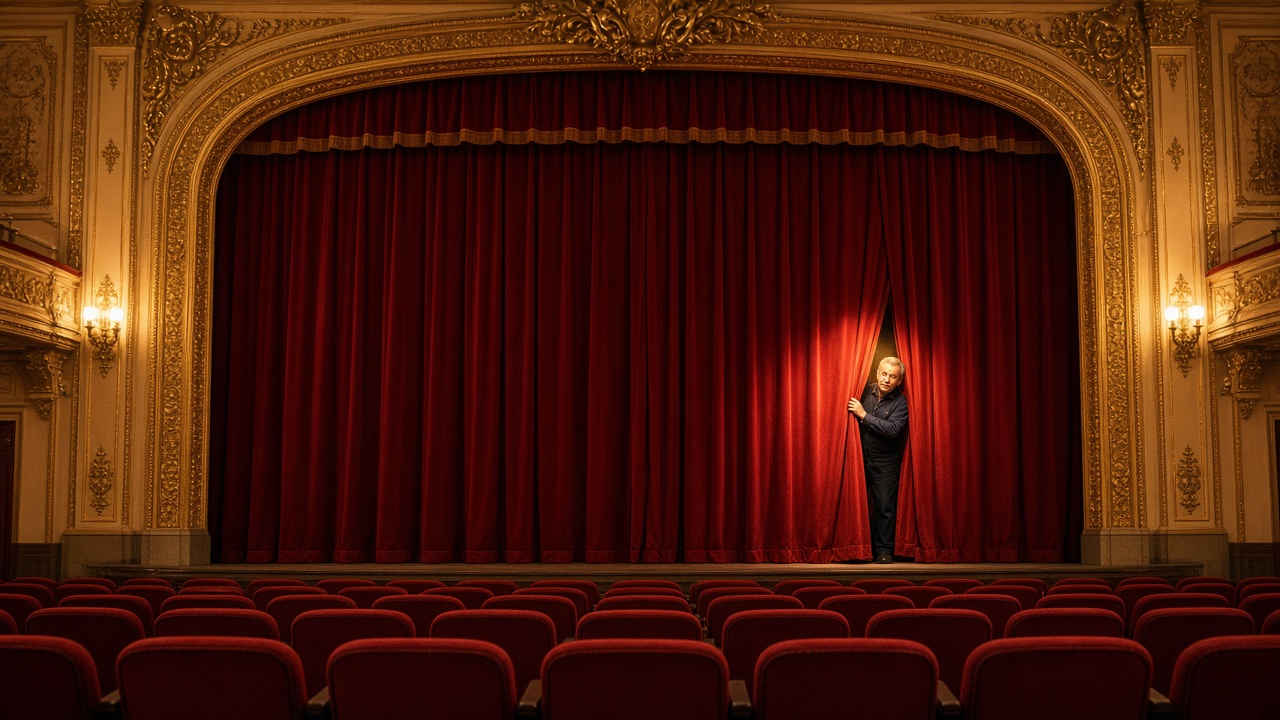
"Pay no attention to the man behind the curtain." Every kid who saw The Wizard of Oz remembers Toto pulling back the drape on a fellow working levers. I've spent more than forty years as that fellow. In the booth, on the roof with the HVAC unit in January, on the phone at 11:40 p.m. because a screen just went dark.
Most of the AI talk in our business is about the movie itself: digital actors, scripts, who gets paid. That fight belongs to the studios and the guilds. I'm more interested in what AI can do for the people who run the building. The box office, the stand, the TMS, the projector, the amp rack and the air handler. Not the movie. The equipment that puts it on the screen.
The booth already talks
Start in the booth, because our equipment has been talking for years. Barco launched CineCare Web, a cloud tool for remote management of digital cinema gear, back in 2012, and today it sells NOC services and proactive service alerts. In 2025 Omnex rolled Christie's Cinergy platform out to nearly 1,000 screens in the UK and Ireland with health alerts, key and TDL management, lamp tracking and service ticketing in one place. CinemaNext's NextAlert watches DCI projectors and servers for things like airflow problems, fan speed irregularities and "light off while playing," and messages the staff a suggested fix.
That's monitoring, and most of it is rules. If the fan drops below X, send an alert. Think of today's alerts as a check-engine light. What AI promises is the old mechanic who hears the bearing going on the test drive. It reads the pattern across a thousand rooms and tells you which projector is about to fail. We're not there yet. Arts Alliance Media said heading into CinemaCon 2025 that it was "exploring" AI for predictive maintenance. The data is there. The smart part is still on the bench.
A TMS that answers back
The booth talks, but somebody has to listen, and that usually means scrolling a TMS log for the one line that matters. This is where I think AI earns its keep first, by doing the reading for us. Picture the projectionist who read the whole manual, remembers every page and never takes a smoke break. Which screens have keys that expire before Friday's first show? Which amp has logged the same fault every Tuesday for a month? A good assistant can answer that in plain English, if it's reading your own logs and manuals and not making things up.
The box office and the stand
Out front, the software is further along. Vista, the cinema software company behind Vista Cloud and Veezi, sells forecasting and assisted scheduling, and says its box office forecasts feed labor scheduling too. Cinemark CEO Sean Gamble said on the fourth-quarter 2025 call that Cinemark already uses AI in pricing optimization, showtime optimization, app and software development, hiring and guest services. A Toronto Metropolitan University thesis built on Cineplex loyalty and point-of-sale data forecast attendance by theater, added a concession food forecast for labor planning, and beat the managers' own schedules.
For most of us, that's the practical win: a weather forecast for the popcorn machine. Nobody trusts it completely, but you check it before the picnic. If Thursday's 7:00 is a horror crowd that buys big drinks and skips the nachos, you staff and prep for it.
Be careful with pricing
Forecasting what people will buy is one thing. Deciding what to charge them is the part that gets executives excited and guests angry. AMC tried charging more for middle seats and less for the front row with Sightline in 2023. People kept buying the middle, the front row stayed empty, competitors didn't follow, and AMC ended it. In June, Cinesa in Spain started testing seat-zone pricing on weekday shows at three complexes, and the reaction on social media was mostly negative. Neither one was sold as AI, but any AI pricing tool runs on the same idea, and Vista lists its own "smart pricing" as still in discovery. A good bartender knows his regulars. A bad one charges them double because he knows they'll be back.
The building pays the bills too
Back in the building, running full air for an empty auditorium is heating the garage with the door open. GridPoint says one U.S. chain it has worked with since 2018 has averaged 17.76% electric and 24.1% gas savings, in part by syncing HVAC schedules to showtimes. Along the way they found that projector exhaust was a big cause of a humidity problem, which any booth tech in July could have told them. Avani says HOYTS cut total energy use 11% across 59 sites by tying building controls to ticket sales, so a room with zero tickets sold can power down. Those are vendor numbers, and some of it is plain automation, not AI. Fine with me. I care whether the meter slows down, not what the brochure calls it.
The guest on the other end of the chat
Then there's the guest with a question. A good chat assistant is the greeter at the door who handles "where's the restroom" so the manager can deal with the refund that's about to get loud. ODEON says its AI agent now resolves or deflects about 60% of guest inquiries and cut refund handling time by 90%. The detail I liked best: when guests were offered a human, more of them stuck with the bot. Filmstaden in Sweden says its chatbot handles about a third of guest inquiries. PVR INOX in India built its WhatsApp assistant to answer wheelchair access and subtitle questions, which is accessibility done the practical way.
Where AI does not belong
Here's where I draw the line. A GPS will happily tell you to drive into a lake. Somebody still has to look out the windshield. There are calls in this building a machine can inform but should never own.
Safety comes first. Fire alarms, exits, emergency lighting, evacuations, lockouts, a tech working on a live rack or a laser projector. AI can remind you an inspection is due. It doesn't decide whether the room is safe to fill.
Presentation is next. A person with eyes and ears signs off the show before the doors open. Light on the screen, focus, the right version, no clipping. "All green" on a dashboard is not a show check. I've walked into plenty of all-green rooms with a dead center channel.
Then anything about a person. Hiring, discipline, the employee who's struggling. Let the software sort the applications. A manager makes the call.
And anything you can't take back. A price change, a refund exception, an email to a distributor about a key or a settlement. AI can write the draft. A named person approves it and hits send.
My test: if it goes wrong, whose name is on it? If the answer is "the software," you've got the wrong owner. Keep a named person on every call that matters. As I wrote in We Fired the Apprentice, automation that pages a ghost is not efficiency.
Start with a pencil
When an owner asks me where to begin, I tell them not to call a vendor yet. Get a pencil and a legal pad and sit in one of your auditoriums on a weekday morning before the first show. House lights at half. No trailers, no popper, just the hum of the HVAC and a fan somewhere up in the booth. Anyone who has worked a theater knows that quiet. It's the best thinking room in the building.
Then write. Where does it hurt? What broke last month, and what breaks every month? Where does your team waste time? Key emails, counting cups, chasing the same service ticket for the third time. What data do you already have (TMS logs, ticket and POS history, service records, energy bills), and is any of it good? If your asset list hasn't been touched since conversion, write that down too. I won't tell anyone.
Next to each item, write who owns that decision today and what success looks like in plain numbers. Fewer missed shows. Less popcorn in the trash. A smaller power bill in August.
Now pick one boring problem off that page. Ask every vendor the same question: is this AI, or is it a rule? Both can be worth buying. Just know which one you're paying for, and measure before and after. If that legal pad is still blank, no vendor is going to fill it in for you. Not a good one, anyway.
Pay attention to the man behind the curtain
Once he's caught, the wizard admits he's a very good man, just a very bad wizard. I've always liked that line. The levers were never the problem. Pretending nobody was pulling them was. AI is a good new set of levers. It'll read logs faster than I can and tell the stand how much popcorn to pop on a rainy Tuesday. It won't walk into a dark auditorium, smell the burnt capacitor and talk a manager down off the ceiling. So use the machine. Just don't pretend nobody's behind the curtain. Somebody still is, and they're the reason the show goes on.
Full disclosure: This article touches on my Cinema AI consulting through Collins Theatre Systems. I am also a manufacturers' representative for Harman/JBL Cinema and Cine LEDMAX from DLS. No vendor named in this article paid for or reviewed it.
Sources
- AV Magazine, Barco launches CineCare Web (Oct 10, 2012). avinteractive.com
- Barco, Cinema Services. barco.com
- Christie, Omnex launches Cinergy across 1,000 screens (June 17, 2025). christiedigital.com
- CinemaNext, NextAlert. cinemanext.com
- Digital Cinema Report, Arts Alliance Media CinemaCon 2025 Preview (Mar 19, 2025). digitalcinemareport.com
- Vista, Film Manager. engage.vista.co
- Vista, Vista Intelligence. engage.vista.co
- Vista Group, 2025 Annual Report. cdn.prod.website-files.com
- Yahoo Finance / MarketBeat, Cinemark Q4 Earnings Call Highlights (Feb 18, 2026). finance.yahoo.com
- Katherine Goff Inglis, Demand Driven Operations Management in Motion Picture Exhibition, Toronto Metropolitan University (2021). doi.org
- AMC Theatres, Sightline pilot press release (July 20, 2023). investor.amctheatres.com
- NPR, AMC reverses seat-based pricing (July 21, 2023). npr.org
- El Mundo, Cinesa seat-zone pricing pilot (June 2026). elmundo.es
- Xataka, Cinesa pricing pilot (June 18, 2026). xataka.com
- GridPoint, A Movie Theater Chain Saved 19% on Energy Costs. gridpoint.com
- Avani, HOYTS case study. avanisolutions.com
- Zendesk, ODEON Cinemas customer story. zendesk.com
- LinkedIn, Filmstaden Greta Garbot post (May 2025). linkedin.com
- Jio Haptik, PVR INOX Movie Jockey case study. haptik.ai